Data Center Security: Why Colocation Facilities Face a Different Physical Threat Than Hyperscalers
- 4 days ago
- 8 min read
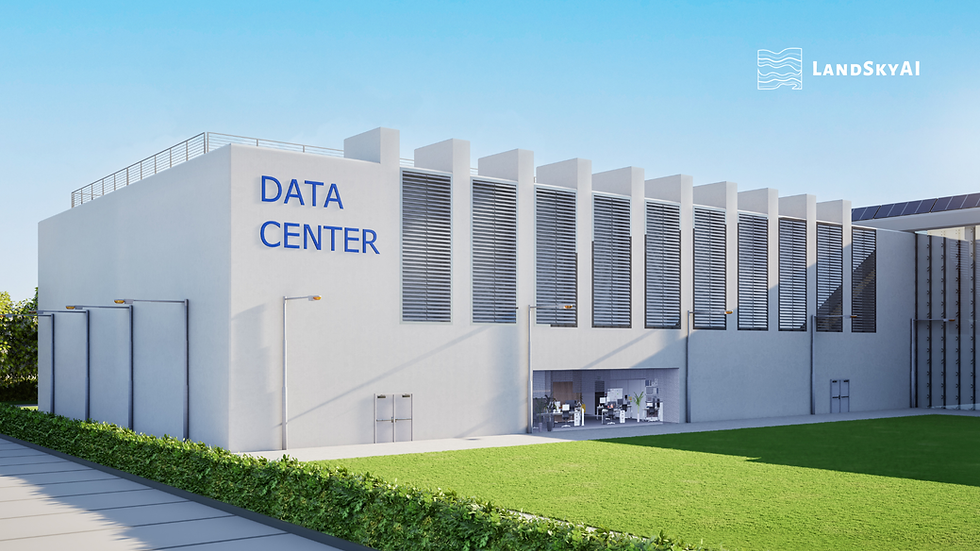
The conversation about data center security almost always starts with cyber threats. Ransomware, network intrusions, credential compromise, supply chain attacks: the digital attack surface is well-documented and most enterprise security teams understand it reasonably well. The physical attack surface gets less rigorous attention, even as the threat to it is measurably growing.
Online threats to physically sabotage data centers have proliferated sharply over the past two years, according to analysis by the Soufan Center, a counterterrorism research organization. Physical sabotage of proposed or operational data centers is now the most frequently identified online threat in that category. The data center boom driven by AI infrastructure demand has made these facilities higher-profile targets for ideologically motivated actors, organized theft crews, and state-affiliated threat groups simultaneously.
There are approximately 5,000 data centers in the United States. The colocation market, facilities that house equipment for hundreds of tenants rather than a single operator, reached $69.9 billion in 2024 and is projected to reach $145.7 billion by 2030. That growth is creating more targets, with more tenants, more access complexity, and more outdoor perimeter to protect. The physical data center security problem is getting larger as the industry expands.
And for colocation facilities specifically, it's a structurally different problem than the one hyperscalers face.
The Data Center Security Threat That Isn't Cyber
Physical security compromises account for 10% of all data breaches, according to the Ponemon Institute's research published in the IBM Cost of a Data Breach Report, at an average cost of $3.96 million per incident. A physical breach can bypass every digital safeguard in a facility: perimeter defense, firewalls, access controls, and encryption are all rendered irrelevant if someone gains physical access to the hardware they're targeting.
The physical threat categories facing data centers in 2025 are distinct and require different defensive responses.
Perimeter intrusion and physical access. Unauthorized entry to a data center campus, whether through fence breach, tailgating through a controlled access point, or exploitation of a less-monitored secondary entrance, creates direct access to the facility's infrastructure. A successful perimeter breach can lead to hardware theft, sabotage of cooling or power infrastructure, or installation of physical surveillance or access devices.
Copper and materials theft. Data centers are copper-dense facilities. Power distribution infrastructure, cooling systems, and electrical supply all involve significant copper content. By the end of 2024, copper prices had risen 7.66% year over year, making data center infrastructure increasingly attractive to organized theft crews. The same theft networks targeting construction sites and utility infrastructure have identified data centers as high-value targets.
Infrastructure sabotage. Cooling towers, backup generators, and utility connections are often located in outdoor or semi-exposed areas of a data center campus. Disruption to any of these systems can cause equipment damage or service outage without requiring access to the data floor itself. The outdoor mechanical and utility infrastructure is frequently less protected than the building's access-controlled interior.
Ideologically motivated attacks. The Soufan Center documented a significant increase in online rhetoric specifically targeting AI-adjacent data center infrastructure in 2025 and 2026, reflecting anti-AI sentiment translating into physical threat intent. This threat category is newer and differently motivated than criminal theft, but its targets overlap: the facilities that house AI training infrastructure are often colocation providers hosting hyperscaler compute.
Why Colocation Data Center Security Is Structurally More Complex
The fundamental difference between a hyperscaler data center and a colocation facility is who's in it and who controls it.
A hyperscaler, an Amazon Web Services campus, a Google data center, a Microsoft Azure facility, is owned and operated entirely by a single company. Every employee on site is a vetted employee of that company. Physical security standards are set and enforced by the operator across every inch of the property. The access control system covers every door, and the only people who go through those doors work for the company that owns the building.
A colocation facility operates entirely differently. The building and shared infrastructure are owned by the colo operator. The equipment inside belongs to dozens or hundreds of separate tenant companies. Each tenant needs physical access for its own IT staff, contractors, and hardware vendors. The operator must manage an access control environment where the population of people with legitimate reasons to be on site is large, diverse, and constantly changing.
This creates several physical security challenges that hyperscalers don't face.
Third-party access at scale. A major colocation facility may process hundreds of authorized access events per day from personnel who are employees or contractors of tenant companies, not the facility itself. Each of those individuals has been authorized for access, but the depth of vetting is determined by the tenant, not the facility operator. Insider threat risk in a colocation environment isn't just internal: it extends to the full population of authorized third-party visitors.
Shared physical proximity. In a multi-tenant colocation environment, tenant A's cage is in the same row as tenant B's cage. Tenant A's authorized technician is in the same data hall as tenant B's equipment. The physical separation between tenants in a colocation facility is significant from a logical security perspective, but the close proximity means that a security failure affecting one tenant's area has potential implications for adjacent tenants.
Shared perimeter with different risk profiles. The colocation operator is responsible for the building perimeter and the facility's outdoor infrastructure. Individual tenants are responsible for their cage or cabinet security inside the building. But the perimeter is shared across all tenants, and a perimeter breach that accesses the facility's outdoor cooling and power infrastructure affects every tenant on the floor.
Budget constraints relative to the threat. Hyperscalers have effectively unlimited security budgets relative to the facilities they're protecting. A hyperscaler with 100 servers doesn't exist: their facilities contain hundreds of thousands. The security investment is proportional to the value of what's inside. Colocation operators are competing on price while managing security obligations to hundreds of tenants simultaneously. Security spending at a colo facility is real and often substantial, but it rarely matches the per-square-foot investment that a hyperscaler makes in a dedicated campus.
The Specific Physical Environments Where Cooling Facilities Are Most Exposed
The outdoor infrastructure at a colocation data center is where the physical security exposure is highest and where traditional security deployments cover least continuously.
Cooling infrastructure. Data centers require massive cooling capacity, and the equipment that provides it, cooling towers, chillers, condensing units, is typically located outside the building's secure perimeter or on the roof. This equipment is physically accessible, operationally critical, and often protected only by the facility's outer perimeter and periodic patrol. Disruption to cooling infrastructure can force an emergency shutdown across the entire facility.
Utility entry points. Power feeds and network fiber enter a data center campus at specific outdoor points. These entry points are known to anyone who has done basic research on the facility. Disruption or compromise at the utility entry point has cascading effects that no amount of internal security can prevent. Access control at the building entrance does nothing to protect a fiber bundle entering the ground 50 feet from the fence line.
Loading docks and equipment staging. Data centers receive and ship hardware continuously. Loading docks are access-intensive, involve third-party delivery personnel, and are often located on the less-prominent side of the facility where camera coverage is thinner. Hardware arriving at a loading dock represents a supply chain security risk in addition to the standard physical access concern.
Parking lots and exterior access areas. The perimeter parking areas at a colocation facility are where authorized technicians, delivery personnel, and contractors arrive. They're also where unauthorized surveillance of facility operations can occur undetected. A vehicle that parks in a facility lot and occupies it for hours while an occupant observes access patterns, shift changes, and security coverage intervals is difficult to identify from fixed perimeter cameras.

How Autonomous Drone Patrols Address the Data Center Security Perimeter
The outdoor security challenges at colocation data centers, cooling infrastructure, utility entry points, loading docks, and perimeter parking, share a common characteristic: they cover large areas that fixed cameras can't continuously monitor from ground level, and they require rapid response when something unusual occurs.
Autonomous drone patrols address both problems.
A drone-in-a-box system deployed at a colocation facility runs continuous patrol routes across cooling equipment areas, perimeter fence lines, loading dock approaches, and utility entry zones on a programmed schedule throughout the overnight and weekend windows when incidents concentrate. When a motion sensor triggers near the cooling towers at 3 AM, a drone launches automatically and reaches the location in under 90 seconds with live aerial video streaming to the security operations center. The response is aerial visual confirmation before any guard has taken a step toward the location.
The aerial vantage point solves the coverage geometry problem that ground-level cameras can't. Equipment staging areas, cooling towers, and utility corridors that are obscured from building-mounted cameras are visible from 80 to 100 feet above the facility. The patrol cycle doesn't have gaps at the angles between fixed cameras. It covers the full outdoor footprint continuously.
A 2026 survey of data center professionals found that 78% had increased physical security requirements in the prior 12 to 24 months, with more comprehensive surveillance and monitoring as the most commonly cited upgrade. The outdoor perimeter coverage that autonomous aerial patrol provides is exactly the category that traditional camera networks and guard programs address least adequately.
LandSkyAI's VirtualGuard program deploys and manages autonomous drone systems for data center facilities, with remote operators monitoring live aerial feeds around the clock. For colocation operators managing physical security obligations across a multi-tenant campus on a budget that doesn't match hyperscale spending, managed aerial coverage provides a continuous outdoor monitoring layer without requiring additional guard headcount at each coverage zone.
Physical Security Documentation for Compliance
Colocation data centers operate under a compliance environment that explicitly requires physical security controls. SOC 2 Type II, ISO 27001, PCI DSS, and HIPAA each include physical security requirements that are audited regularly.
SOC 2's trust service criteria include requirements for physical access controls and environmental protection, covering both who can access the facility and what monitoring exists for physical security events. ISO 27001 requires documented physical security perimeter controls, visitor access management, and protection of equipment against physical threats. PCI DSS requires physical access controls for environments handling cardholder data.
The compliance requirement isn't just that physical security exists. It's that it can be documented. An auditor reviewing physical security controls wants to see evidence: access logs, incident reports, monitoring records, and documentation of how security events were identified and responded to.
Continuous aerial patrol generates the documentation layer that compliance frameworks require: timestamped, geo-tagged records of security coverage across the full facility footprint throughout every overnight and weekend window. When an auditor asks what physical security monitoring covered the facility's cooling infrastructure and utility access points overnight, the answer is either "periodic guard rounds with documentation gaps" or "continuous aerial footage across those zones, available in full." For SOC 2 and ISO 27001 audits, those are materially different answers.
For colocation operators whose tenants are themselves subject to compliance requirements, demonstrating robust physical security controls at the facility level supports tenants' own compliance positions. It's a security investment that benefits the operator and every tenant it serves.
LandSkyAI provides autonomous drone security for data center campuses, including full perimeter and outdoor infrastructure coverage, FAA-authorized operations, and 24/7 remote monitoring through VirtualGuard. If your facility's current physical security program leaves outdoor infrastructure, utility access points, and perimeter zones covered intermittently, we can show you what continuous aerial monitoring looks like on your specific campus footprint.

Did you find this article useful? Are you interested in seeing us in action?
MissionControl is LandSkyAI’s ongoing town hall style webinar where you can get to know who we are, what we do, and how we’ve built our autonomous security programs. We also conduct a fully live remote drone demo, every time!
Our next event is on Wednesday, August 26th, 2026
Thank you for reading SkyBlog! Found it interesting? Hit that link 🔗 button and send to a friend! If you have questions or want to explore how these solutions apply to your environment, contact the LandSkyAI team below to start a conversation. ✌️
Sources
Violent Threats and Data Center Resistance Accelerate | The Soufan Center
Request for Comments on Bolstering Data Center Growth, Resilience, and Security | Federal Register
Homeland Threat Assessment 2025 | Department of Homeland Security
Data Centers Integrate Cyber and Physical Security in 2025 | Data Center Knowledge
Data Centers Confront Rising Cyber and Physical Security Threats | Bloomberg Law
Attacks on Data Centers: The Biggest Threat to the AI Boom | SC Media
Beyond Visual Line of Sight (BVLOS) | Federal Aviation Administration