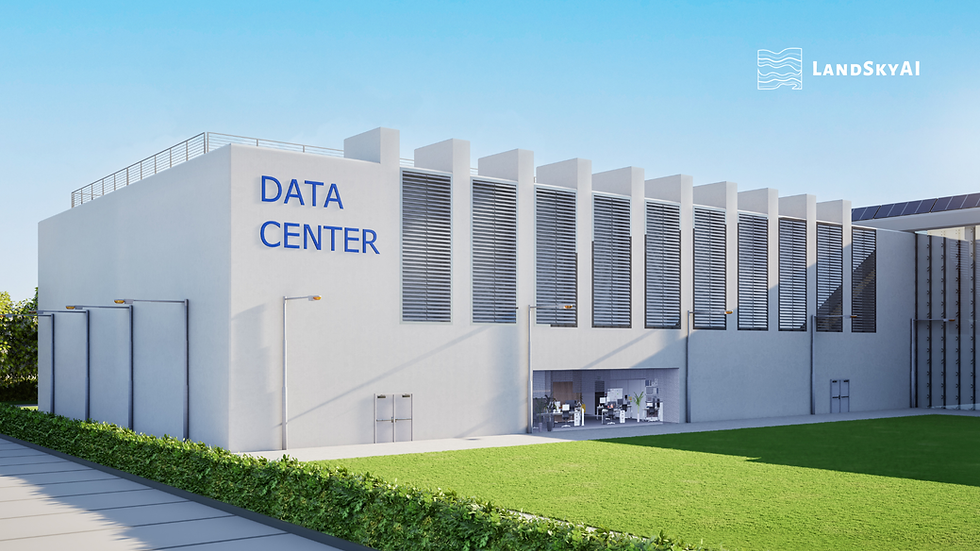
Data Center Security: Why the AI Infrastructure Boom Is Creating a Physical Security Crisis

On March 1, 2026, Iranian Shahid drones struck data centers in Bahrain. They targeted cooling infrastructure, power systems, and rooftop equipment directly. Amazon Web Services flagged operational issues across its Bahrain and UAE regions in the aftermath. It wasn't a cyberattack. It was a physical strike on critical infrastructure, executed from the air, against facilities that housed billions of dollars in computing assets.
Most data center security teams weren't running a program that would have detected that threat before it arrived.
That incident is an extreme example of a real and growing problem. The AI infrastructure boom is creating data centers faster than security programs can mature around them. In 2025 alone, U.S. data center construction starts reached $77.7 billion, a 190% year-over-year increase. In the first half of 2026, another $88 billion in projects are set to break ground. These facilities house the most concentrated, most valuable, and most operationally critical physical infrastructure in modern commerce. And right now, most of them are significantly underprotected from the threats that matter most.
Data Center Security Is Being Outpaced by Construction Speed
The core problem is timing. Data center construction has accelerated to a pace the security industry hasn't seen before. Hyperscalers, AWS, Microsoft, Google, Meta, Oracle, are projecting combined capital expenditures exceeding $600 billion in 2026. The Stargate Project alone committed $500 billion over four years to new U.S. AI infrastructure. Goldman Sachs models $765 billion in annual AI CapEx for 2026 globally.
That's a lot of buildings going up fast. And fast construction means security infrastructure gets planned at the end of the project timeline, not the beginning. Physical security programs for a major data center campus can take twelve to eighteen months to fully design and staff. Construction timelines are pushing to get facilities operational in twelve months or less. The gap between "the building is live" and "the security program is ready" is where exposure lives.
This isn't a criticism of the operators. It's the structural reality of building at this speed. Security planning that would normally precede construction is running concurrently with it, or behind it. The threat environment that exists when a facility opens isn't the same one that was modeled when the security plan was written.
More than half of data center professionals cited human threats, internal and external, as the biggest security risk to their infrastructure in a 2026 AFCOM survey. The facilities being built right now will face that threat environment from day one of operations. Most won't have a mature physical security program in place to meet it.
What's Actually at Risk
The numbers that frame data center security risk aren't abstract. IBM estimates the global average cost of a data breach reached $4.4 million in 2025, climbing to $10.22 million in the U.S. specifically. Data center downtime runs at an estimated $9,000 per minute in direct costs, not including the downstream consequences for the businesses that depend on the infrastructure.
But the physical threat isn't just about data. The hardware itself is the target in an increasing share of incidents. Enterprise computing equipment, AI accelerators, storage arrays, and networking hardware represent extraordinary concentrations of value on a per-square-foot basis. A well-planned physical intrusion targeting hardware staging areas, loading docks, or equipment storage can result in losses that rival major cargo theft events.
The construction phase is often the highest-risk window. New facilities are physically accessible in ways that operational facilities aren't. Contractors, vendors, and subcontractors cycle through constantly. Access control systems aren't fully commissioned. Camera coverage has gaps. The site perimeter is evolving week by week as construction progresses. Organized theft crews actively target construction sites, and data center builds with hundreds of millions in equipment being delivered and staged represent exactly the kind of high-value target they look for.
Once a facility is operational, the risk profile shifts but doesn't shrink. Large campus footprints, multiple access points, 24/7 operations with rotating staff and contractor access, and the physical concentration of irreplaceable assets create a persistent security challenge that fixed cameras and perimeter fencing alone weren't designed to handle.
The Drone Threat Data Center Security Isn't Ready For
The Bahrain incident isn't an isolated data point. It's the visible end of a threat spectrum that starts much closer to home.
Unauthorized drones over sensitive facilities have become a documented, systematic problem in 2025 and 2026. The U.S. military detected 350 unauthorized drones over more than 100 different installations in the past year. The FAA is tracking more than 100 drone incidents at airports every month. Federal legislation is being actively considered to allow critical infrastructure operators to take defensive action against unauthorized drones, because right now the legal framework for private operators to defeat a drone in U.S. airspace remains unclear.
Data centers face a specific version of this threat. Spies and corporate espionage actors have been documented landing drones on the rooftops of facilities to conduct remote network intrusion, mapping wireless access points and probing internal systems from the outside. A drone doesn't need to penetrate physical access controls to cost a facility something significant. It needs a clear line of sight to the building and a payload that can communicate with internal networks.
The threat isn't purely nation-state. Competitive intelligence operations, criminal groups targeting operational data, and activists looking to disrupt infrastructure all have access to commercial drones that can execute aerial surveillance operations for a few hundred dollars. The barrier to entry for a drone-based reconnaissance mission is essentially zero.
Most U.S. data center operators have no program to address unauthorized aerial threats. That's a security gap that exists right now, at facilities that are already operational, housing infrastructure that organizations and governments depend on.
Why Standard Perimeter Security Doesn't Scale to Campus Size
The perimeter security model that works for a single-building facility breaks down at data center campus scale.
A modern hyperscale data center campus can cover 200 acres or more. Fixed cameras provide coverage of defined zones, but camera infrastructure for a campus that size requires significant capital investment and still leaves coverage gaps as the site evolves. Ground-based guard patrols cover the same geometry problem that every large-site security operation faces: one person can only be in one place, and a large campus has too many places to cover continuously.
Access control systems manage entry points, but they're designed for people. They don't account for vehicles staged in perimeter lots, equipment left in outdoor storage areas overnight, or anyone approaching the property from outside the defined access points. And they provide zero coverage for the airspace above the facility.
The result is that most data center campuses have strong security at defined entry points, adequate surveillance in operational interior zones, and significant gaps everywhere else. Loading dock areas, cooling infrastructure yards, power distribution equipment, and the perimeter boundary itself are where coverage thins out. That's also where the most valuable physical targets are concentrated.

How Autonomous Drone Patrols Address the Coverage Gap
Autonomous drone security was built for exactly this problem. Large sites, complex perimeters, high-value assets, 24/7 coverage requirements, and the need for rapid response to threats anywhere on the property.
A drone-in-a-box system positioned at a data center campus provides continuous aerial coverage across the full site on a randomized patrol schedule. Every cooling yard, every loading dock area, every section of perimeter fence, and every outdoor equipment zone is covered on every patrol cycle. When something changes, a vehicle that doesn't belong, a person moving through a restricted zone, a drone approaching the facility's airspace, the system detects it and dispatches a response immediately.
That response is managed by a live operator at a remote operations center. At LandSkyAI, those operators are FAA Part 107 certified, monitoring multiple aircraft simultaneously from a 24/7 operations facility. When a drone detects an anomaly, the operator is watching live thermal and HD video, making the call on whether to activate lights and audio alerts, escalate to law enforcement, or stand down. Every incident is documented with timestamped video evidence.
One operator can manage up to six drones simultaneously across a site, which is what makes the economics work at data center scale. Aerial coverage that would require a significant expansion of the ground security team is delivered by a remote operations model that runs continuously without shift change gaps, call-outs, or fatigue.
The construction phase is where deployment speed matters most. LandSkyAI's LandSky Node, the self-contained deployment infrastructure that brings its own connectivity and power management, allows a site to be operational for drone security in hours rather than weeks. A data center that goes live on Monday can have autonomous aerial patrols running by Tuesday, covering the highest-risk period of early operations before the full security program is commissioned.

Counter-Drone Protection Is the Layer Most Data Centers Are Missing
Autonomous drone patrols close the aerial coverage gap from the defensive side: your drones covering your perimeter. But data center security also needs to address the offensive side: unauthorized drones entering your airspace.
AirGuard, LandSkyAI's managed counter-drone service, addresses exactly this. Detection hardware is deployed at the facility, integrated with the VirtualGuard platform, and monitored 24/7 by the same remote operations team. When an unauthorized drone is detected approaching the facility, it's geolocated, the operator is alerted, and the incident is documented with timestamp and flight path data. Law enforcement or the appropriate response team gets actionable intelligence in real time.
This is the capability the Bahrain incident demonstrated the value of, and what the new federal legislation is designed to enable more broadly. The conversation among data center security professionals has shifted from "is aerial threat a real concern?" to "how do we build a program that addresses it?" The answer isn't a hardware purchase. It's a managed service with certified operators, proven detection infrastructure, and clear escalation protocols.
For data center operators building security programs around facilities that will be operational for twenty or thirty years, counter-drone capability isn't a future consideration. It's a current requirement.
The Window for Getting Ahead of This Is Now
The AI infrastructure buildout is the fastest, largest construction cycle the data center industry has ever seen. The security programs for these facilities are being designed right now. The operators who build aerial security and counter-drone capability into their programs from the start will have a significant advantage over those who try to retrofit it later.
LandSkyAI deploys across all stages of a data center's lifecycle: during construction, at initial operations, and across mature campus environments. The VirtualGuard managed program adapts to the site as it evolves, with patrol routes updated as the campus grows and coverage extended to new phases as they come online.
The infrastructure is being built. The threat is already here. Data center security programs that don't account for the airspace above their campus are incomplete, and the window to address that proactively is shorter than most operators realize.
LandSkyAI deploys fully managed data center security programs combining autonomous aerial patrols and counter-drone monitoring. From construction through operations, our VirtualGuard platform covers the full campus, 24/7. Contact us to schedule a site assessment.
What do you think is the biggest physical security risk for AI data centers right now?
Unauthorized drone surveillance
Perimeter breaches during construction
Insider threats from contractor access

Did you find this article useful? Are you interested in seeing us in action?
MissionControl is LandSkyAI’s ongoing town hall style webinar where you can get to know who we are, what we do, and how we’ve built our autonomous security programs. We also conduct a fully live remote drone demo, every time!
Our next event is on Wednesday, July 29th 2026
Thank you for reading SkyBlog! Found it interesting? Hit that link 🔗 button and send to a friend! If you have questions or want to explore how these solutions apply to your environment, contact the LandSkyAI team below to start a conversation. ✌️
Sources
Measuring the Data Center Boom: Facts and Statistics 2026 | Programs.com, The $7 Trillion Race for AI Data Center Infrastructure | McKinsey
AI Data Center Build Advances at Full Speed | BloombergNEF, Data Centers Confront Rising Cyber and Physical Security Threats | Bloomberg Law
Defending Data Centers from Drone Espionage and Attacks | DroneShield, Drone Threat to Data Centers: What C-UAS Security Programs Must Address Now | Autonomy Global, Airborne Intrusion: Why Drones Are the New Mobile Perimeter Threat | SecureWorld, AI Datacenter Construction Boom Ignites Massive Growth Opportunity for Drone-as-a-Service Industry | GlobeNewswire