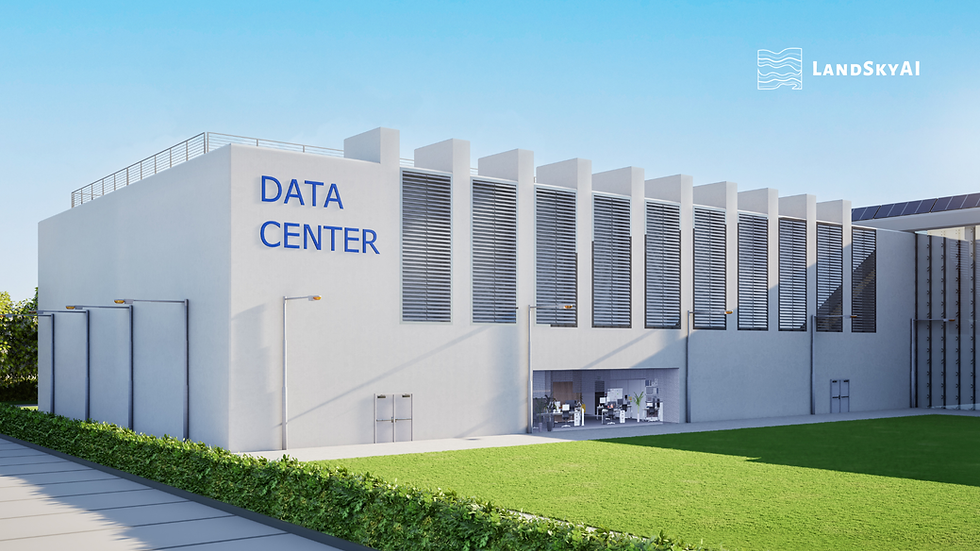
Data Center Physical Security Compliance: What SOC 2 and ISO 27001 Expect from Your Perimeter Program

Most data center operators know they need physical security. Fencing, cameras, badge access, mantraps, visitor logs: the standard infrastructure of a facility that handles other organizations' data is well understood. The question compliance auditors are asking is different.
It's not whether the controls exist. It's whether they operated, continuously and effectively, during the period under review. And it's whether your organization can prove that with documentation.
SOC 2 Type II and ISO 27001 are the two compliance frameworks that most enterprise data centers, colocation providers, and managed service operators face when they pursue certification or host clients who require it. Both frameworks include physical security requirements. Both require evidence of ongoing operation, not just system installation. And both are increasingly scrutinized at the perimeter level, where the gap between what organizations say they're monitoring and what they can actually document is widest.
This is what data center physical security compliance under those two frameworks actually requires, and where continuous autonomous monitoring fits into the compliance evidence picture.
What Data Center Physical Security Standards SOC 2 and ISO 27001 Actually Require
The two frameworks approach physical security differently, but both converge on the same core compliance obligation: documented, ongoing controls that cover the physical perimeter.
SOC 2 is the AICPA's framework for service organizations. The Trust Services Criteria that SOC 2 audits evaluate include Security as a baseline criteria, with Availability, Processing Integrity, Confidentiality, and Privacy as additional categories that organizations can add to their scope. Physical security controls fall primarily under the Security criteria, which requires that the system is protected against unauthorized access, use, or modification.
For data centers, the physical security controls SOC 2 auditors evaluate include: secure facility design and construction such as perimeter fencing, secure entrances, and surveillance systems; access controls that limit physical entry to authorized individuals with appropriate authentication; surveillance and monitoring systems designed to detect and respond to unauthorized access or suspicious activity; and visitor management procedures including escort protocols and access logs.
ISO 27001:2022 takes a more prescriptive approach to physical security through its Annex A control set. The 2022 revision restructured physical controls into a dedicated domain, Annex A.7, making physical security perimeters a more prominent compliance focus than in the prior 2013 version. Annex A.7.1, specifically titled "Physical Security Perimeters," requires organizations to define and use security perimeters to protect areas that contain information and other associated assets. The standard requires implementation of appropriate entry controls and barriers including walls, gates, and electronic surveillance to control entry and monitor activity at perimeter access points.
Both frameworks require more than the presence of these controls. They require documented evidence that the controls operated as intended during the audit period.
The SOC 2 Type II Operating Effectiveness Problem
The distinction between SOC 2 Type I and Type II is the distinction that matters most for physical security compliance.
A SOC 2 Type I report evaluates whether controls are suitably designed to meet the Trust Services Criteria at a specific point in time. It's a point-in-time snapshot. An auditor visits, reviews your control documentation, and determines whether the design of your physical security program is appropriate.
A SOC 2 Type II report evaluates whether those controls operated effectively over a period of time, typically six to twelve months. The auditor isn't just asking whether you have perimeter cameras. They're asking whether those cameras provided continuous coverage during the observation window, whether access logs were maintained throughout the period, whether physical access events were monitored and reviewed consistently, and whether any gaps in coverage were identified and addressed.
That operating effectiveness standard is where physical security programs at data center facilities most commonly struggle. A camera system that was installed and operational during a Type I audit may have had coverage gaps, maintenance outages, or monitoring failures during the twelve-month window that a Type II audit covers. If those gaps aren't documented and remediated, they become findings. If they're systemic, they can affect the opinion on the report.
The evidence SOC 2 Type II auditors request for physical perimeter controls includes continuous access logs showing every physical entry and exit event at perimeter access points throughout the observation period, monitoring records demonstrating that surveillance systems were operational and actively monitored rather than recording passively to unreviewed storage, incident logs covering every physical access anomaly detected and the response taken, and evidence that controls covered the full scope of the facility's physical perimeter rather than a subset of access points.
A perimeter surveillance program that operates continuously and generates machine-timestamped coverage records for every patrol produces the operating effectiveness evidence that SOC 2 Type II requires as a byproduct of normal operations. A program that relies on guard logs, manually completed patrol records, and periodic camera reviews produces documentation that auditors routinely find incomplete.
ISO 27001 Annex A.7.1 and What the 2022 Revision Changed
The ISO 27001:2022 revision made physical security more specific and more auditable than its 2013 predecessor.
The 2013 version of ISO 27001 included physical security controls in Annex A.11, "Physical and Environmental Security." The 2022 revision reorganized these into Annex A.7, "Physical Controls," and added specificity about what perimeter protection requires in practice.
Annex A.7.1 requires organizations to establish physical security perimeters to prevent unauthorized physical access, damage, and interference to assets. For data centers, this means defining clear physical boundaries that separate public spaces from secure processing environments, implementing appropriate barriers including fencing, walls, and gates, and deploying electronic surveillance to control entry and monitor activity at all perimeter access points.
The audit requirements under ISO 27001 Annex A.7.1 are specific. Organizations must provide documentation of the physical boundaries of all security perimeters within their scope, including site plans or floor maps showing boundary locations and entry points. They must demonstrate that surveillance systems cover all perimeter access points. And they must show evidence of periodic review to confirm that perimeter controls remain effective and that all technical controls are functional.
The "periodic review" requirement is where many data center physical security programs fall short. A camera system and a fence are not periodic review evidence. Periodic review evidence is a documented examination of whether the perimeter controls are functioning as intended, whether coverage has degraded due to equipment issues or physical changes to the facility, and whether any new perimeter exposure has been created by facility modifications or expansion.
A continuous aerial monitoring program that generates timestamped patrol records across the full perimeter provides that periodic review evidence automatically. The flight logs from an autonomous patrol program document, on a continuous basis, that coverage extends to every perimeter zone, that monitoring is active rather than passive, and that the program has operated throughout the certification period without documented gaps.
The Gap Between Having Controls and Proving They Worked
Data center physical security compliance failures at audit time typically don't happen because a facility had no perimeter controls. They happen because the documentation of those controls doesn't satisfy the operating effectiveness standard auditors apply.
The most common physical security findings in SOC 2 Type II and ISO 27001 audits fall into three categories.
Incomplete coverage documentation. A camera system covers the main entrance and loading dock but doesn't cover the rear perimeter fence line or the exterior of the secondary access point. The cameras that exist are documented. The areas they don't cover aren't. An auditor reviewing the perimeter coverage map against the facility's physical footprint identifies the gap. The finding is not that cameras are absent. It's that the perimeter isn't fully covered.
Passive monitoring without active oversight. Cameras record continuously to storage. No one reviews the recordings unless an incident is reported. SOC 2 and ISO 27001 both expect monitoring to be active: someone or something is watching what the cameras see and responding to anomalies. Cameras that record without active monitoring satisfy the "surveillance" requirement on paper but not the "detect and respond" requirement that both frameworks specify.
Documentation gaps during the observation period. Guard patrol logs have gaps. Camera systems have maintenance windows that aren't documented. Access logs have periods where the logging system was offline. In a SOC 2 Type I audit, these gaps may not be visible. In a Type II audit covering twelve months of operational history, they appear in the evidence and become findings.
Continuous autonomous perimeter monitoring addresses all three categories. It provides coverage of the full perimeter footprint, including the zones that fixed cameras cover inadequately. It provides active, operator-reviewed monitoring through a remote operations center rather than passive recording. And it generates machine-timestamped records for every patrol flight that cover the full observation period without gaps, providing exactly the operating effectiveness evidence that both frameworks require.
How Continuous Aerial Monitoring Satisfies Both Frameworks
The compliance evidence that SOC 2 Type II and ISO 27001 auditors require from a data center physical security program maps directly to what an autonomous drone perimeter program generates as a byproduct of normal operations.
Coverage documentation. Every patrol flight produces a timestamped record of the perimeter zones covered, at what altitude, and with what camera orientation. The coverage map from an autonomous perimeter patrol program demonstrates, with logged data, that surveillance extended to the full perimeter footprint during the observation period.
Active monitoring evidence. LandSkyAI's VirtualGuard remote operations center has trained operators monitoring live drone feeds throughout every patrol. Anomaly detections generate verified operator responses rather than unreviewed alerts. The monitoring record documents not just that surveillance was active, but that a human operator reviewed every detection event and determined the appropriate response.
Continuous operating history. The flight logs from an autonomous patrol program cover the full compliance observation period without the gaps that guard patrol schedules and manual documentation systems produce. An auditor requesting twelve months of perimeter monitoring evidence receives twelve months of machine-timestamped records, not twelve months of guard logs with documented gaps during holidays, overnight shifts, and turnover transitions.
Incident response documentation. Every perimeter anomaly detected during the observation period generates a documented incident record: what was detected, when, where on the perimeter, what the aerial verification showed, and what response was taken. That incident record is the documentation layer that demonstrates controls operated in response to actual events during the period, not just in theory.
The average cost of a data breach reached $6 million in 2026, according to ASIS International research. For data center operators hosting enterprise clients, the reputational and contractual consequences of a physical security finding in a SOC 2 report or an ISO 27001 surveillance audit can carry costs that exceed the compliance program investment several times over. The documentation standard that both frameworks apply to perimeter security exists precisely because the consequences of physical perimeter failures at data centers are severe.
LandSkyAI provides autonomous drone security for data center facilities, including full perimeter coverage with FAA-authorized BVLOS operations, 24/7 active monitoring through VirtualGuard, and audit-ready compliance documentation covering the full observation period required for SOC 2 Type II and ISO 27001 certification. If your current perimeter program produces documentation gaps that your auditors are finding, we can walk through what continuous autonomous monitoring looks like on your specific facility footprint.
Schedule a data center security assessment.
Which compliance area is most challenging for your perimeter program?
SOC 2 Type II operating effectiveness documentation
ISO 27001 Annex A.7.1 perimeter coverage evidence
Active monitoring logs versus passive camera recording

Did you find this article useful? Are you interested in seeing us in action?
MissionControl is LandSkyAI’s ongoing town hall style webinar where you can get to know who we are, what we do, and how we’ve built our autonomous security programs. We also conduct a fully live remote drone demo, every time!
Our next event is on Wednesday, September 30th, 2026
Thank you for reading SkyBlog! Found it interesting? Hit that link 🔗 button and send to a friend! If you have questions or want to explore how these solutions apply to your environment, contact the LandSkyAI team below to start a conversation. ✌️